Health and Safety Policy for House Clearance Tower Hamlets
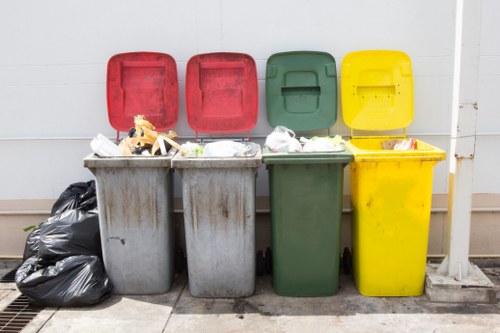 This Health and Safety Policy sets out the standards and procedures for safe operation of house clearance and rubbish removal activities across our service area. It applies to all staff, contractors and anyone engaged in domestic clearance, estate clearance, and waste clearance operations. The primary aim is to protect people, property and the environment while delivering efficient and compliant removal of household waste and unwanted items.
Our organisation recognises the legal and moral duty to maintain a safe working environment. Responsibilities are clearly defined: managers must ensure safe systems of work; employees must follow instructions and use provided equipment; and contractors must meet our safety expectations before commencing any job. This policy supports risk-based decisions and continuous improvement through regular review.
 Site-specific risk assessments and method statements are mandatory before any clearance begins. These documents identify hazards such as sharp objects, heavy lifting, hazardous materials and unstable structures. They also describe control measures such as segregation of waste, use of mechanical aids and exclusion zones to reduce exposure to harm during rubbish clearance and house clearance tasks.
Personal protective equipment (PPE) is provided according to task risk assessments. Typical PPE includes gloves, steel-toe boots, high-visibility clothing and eye protection where required. Employees must wear PPE correctly and report any defects. Training in PPE selection, fitting and maintenance is part of induction and refresher programmes for all clearance operatives.
Manual handling controls are integral to preventing musculoskeletal injuries. Mechanical aids, team lifts and appropriate lifting techniques are used for heavy or awkward items. Where possible, items are dismantled to reduce weight and improve stability during collection. Employees receive training on safe handling and are encouraged to flag tasks that need additional resources or equipment.
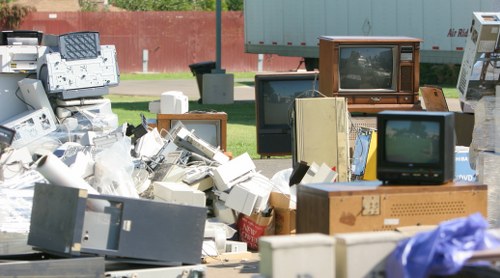
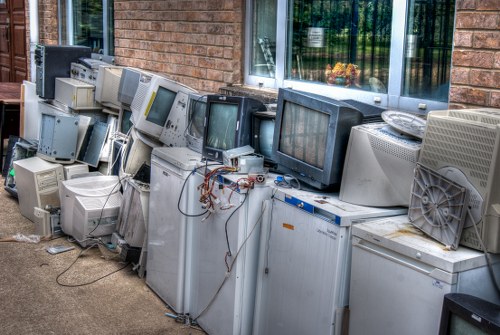 Waste segregation and hazardous material management are essential for safe and sustainable clearance operations. Contaminated items, batteries, solvents and electrical goods are separated and managed according to accepted waste transfer practices. We do not accept responsibility for specialist hazardous waste removal without prior assessment and an agreed method for safe disposal.
Vehicles used for rubbish removal are inspected daily and maintained in line with manufacturer guidance. Loads are securely contained, and drivers must follow safe loading procedures to prevent shifting during transit. Vehicle safety also includes adherence to local traffic regulations and considerate parking to minimise risk to pedestrians and other road users in the service area.
Site security and public protection are included in every clearance plan. Where properties are being cleared in densely populated areas, cordons or signage may be used to keep bystanders at a safe distance. Tools and equipment are stored securely when not in use, and keys or access codes are managed to prevent unauthorised entry.
Our training programme covers induction, task-specific instruction and periodic refresher training. Topics include risk assessment interpretation, safe use of equipment, manual handling, spill response and how to deal with potentially hazardous finds during clearance. Competency is recorded and reviewed to ensure staff remain capable and confident.
 Emergency procedures are established to respond to incidents such as injuries, fires or hazardous material discoveries. First-aid provisions are maintained, and staff know how to summon emergency services. Incidents are reported and investigated to identify root causes and prevent recurrence, with corrective actions tracked to completion.
Monitoring and review ensure the policy remains effective. Regular site audits, toolbox talks and management reviews identify trends and improvement opportunities. Performance indicators include incident rates, near-miss reports and compliance with waste handling standards in domestic and commercial clearance operations.
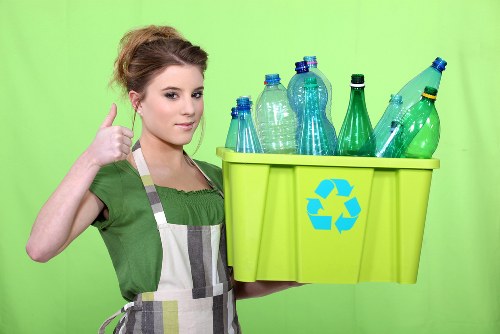
 Environmental considerations are embedded in our approach: reuse and recycling are prioritised, and waste disposal routes are chosen to minimise landfill. Where possible, items suitable for reuse are set aside for donation or reclamation. Our commitment is to deliver responsible rubbish clearance and domestic junk removal across the service area while reducing environmental impact.
Policy commitments
We commit to maintaining a safe working environment by implementing this policy, allocating sufficient resources, and fostering a safety culture where concerns are raised without fear of reprisal. The organisation will ensure that contractors and partners adhere to the same standards during any on-site work.
Key actions
Key actions include:
- Conducting pre-job risk assessments and producing method statements for all clearances.
- Providing and enforcing use of appropriate PPE and safety equipment.
- Maintaining vehicles and equipment to safe standards.
- Training staff and verifying competency in clearance tasks and rubbish removal.
- Ensuring proper segregation and lawful disposal of waste streams.
By adhering to this Health and Safety Policy, our team aims to deliver professional and safe house clearance, rubbish removal and waste clearance services across the service area. Regular review and engagement with staff will ensure the policy remains current and effective.
This policy is reviewed periodically and updated to reflect operational changes and lessons learned from incident investigations.